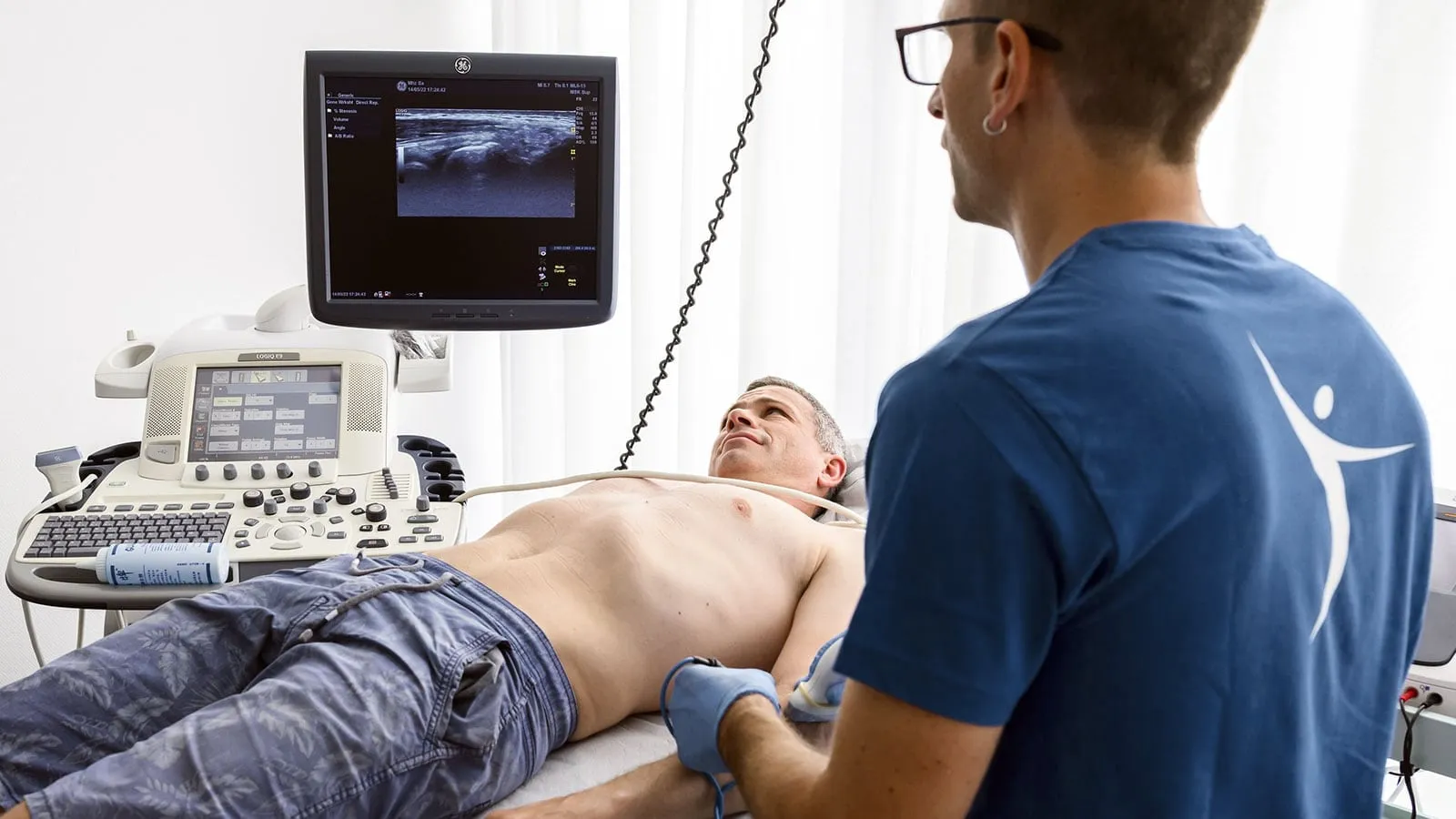
In recent decades physiotherapy has moved beyond conventional practice and become increasingly specialised. Invasive physiotherapy grew out of this development: the physiotherapist passes an acupuncture needle through the skin to the tissue being treated, often under ultrasound guidance. This can be a tendon, muscle, nerve, ligament, bursa or joint capsule.
What are the techniques of invasive physiotherapy?
The five most common are percutaneous electrolysis (EPM®), ultrasound-guided percutaneous neuromodulation (NMP_e®), dry needling, electroacupuncture and mesotherapy. In all of them the needle is used for assessment, treatment or both.
Why is ultrasound used?
Ultrasound makes it possible to assess the tissue and guide the treatment. In EPM® and NMP_e® the physiotherapist watches the needle on the screen while inserting it; in dry needling this is possible. Anyone who practises these techniques must therefore first know musculoskeletal ultrasound well.
When is invasive physiotherapy used?
Mainly when earlier treatments have not worked. It does not replace conventional physiotherapy: the therapist combines it with exercise and other treatments to strengthen their effect.
How many sessions are needed?
It depends on the problem. Three to five are usually needed, for example for tennis elbow (epicondylitis), and the first results can often be seen after the first session.
What are the benefits?
The cost-benefit ratio is good: few sessions are needed and the patient can return to work sooner, which also saves money for loss-of-earnings insurers.
How long has it existed?
Orlando Mayoral first used the term “invasive physiotherapy” in 2001. In Switzerland the first patients were treated in 2015, at the Clinica Ars Medica in Gravesano, Ticino. In 2021 the Swiss Association of Invasive Physiotherapy (SAIP) was founded in Bellinzona; it keeps the register of recognised therapists.